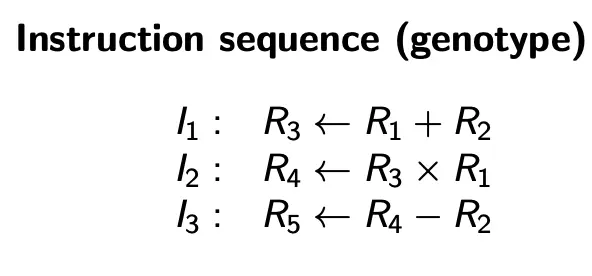
In linear genetic programming (LGP), an individual is not a tree but a sequence of instructions executed step by step. Program state is stored in registers , where each instruction reads some registers and writes to another. The final output is taken from a designated register. This makes GP resemble assembly code, 3-address code, or the intermediate representations used in compilers.
A generic instruction has the form:
where .
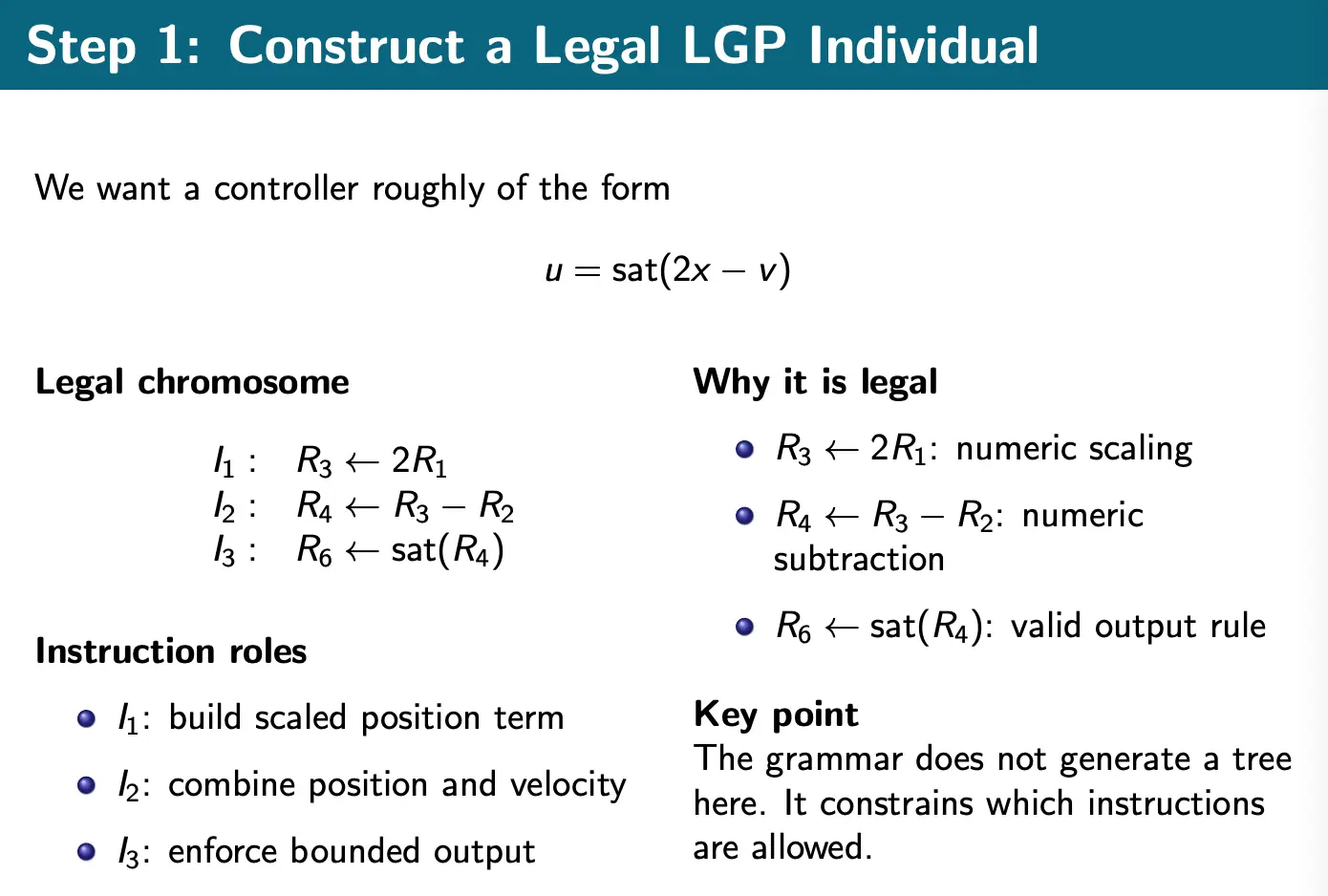
For example, let’s say we want to compute . A simple LGP program is:
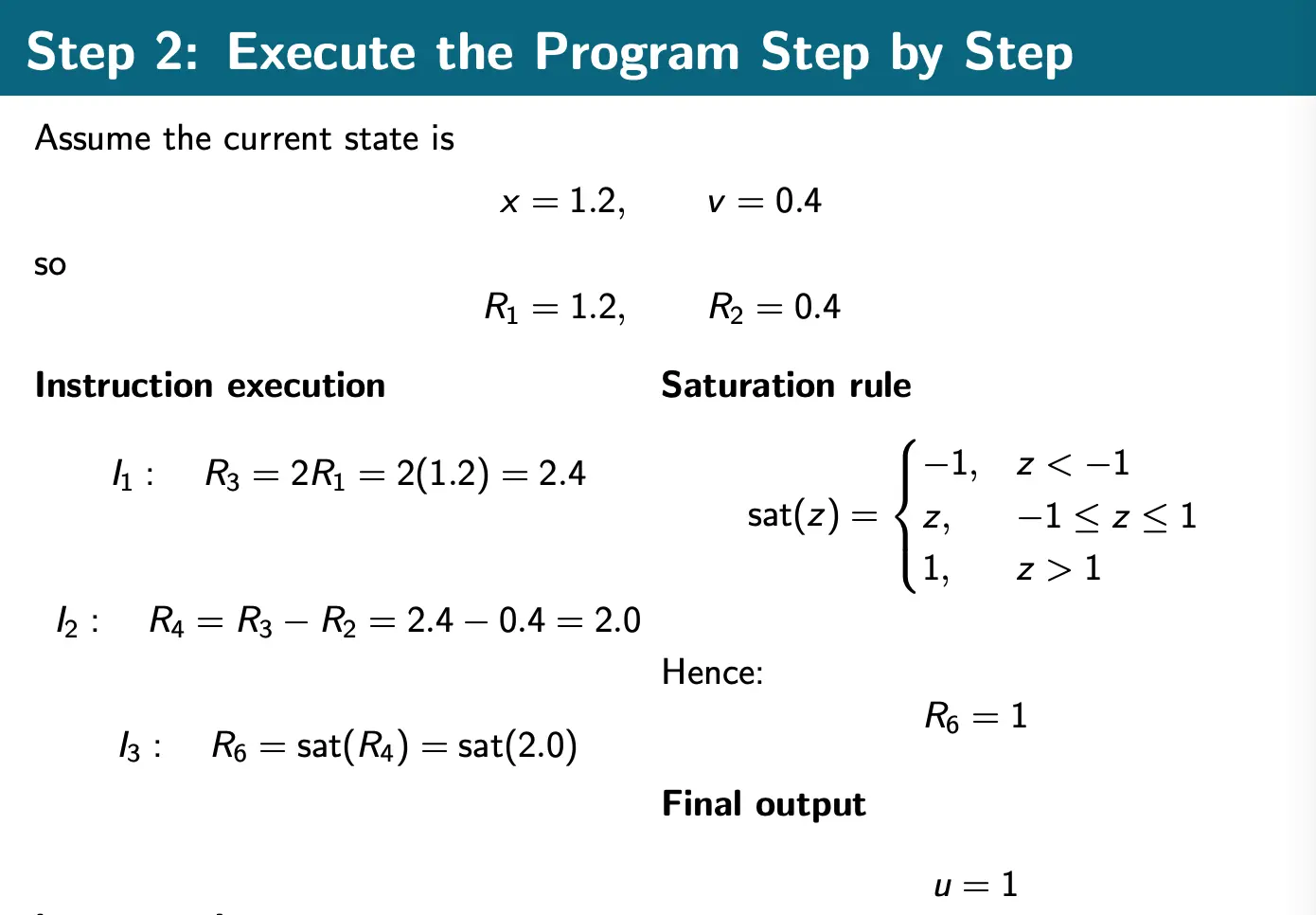
Then, the output .
This program is evaluated sequentially, so intermediate values are explicit and reusable, although registers might be overwritten later. Unlike standard tree GP, the execution order is part of the genotype itself.
LGP has the advantage of being natural for imperative or machine-level computation, requiring no recursive tree traversal during execution. That makes it efficient on CPUs and embedded hardware. It’s also easy to include memory, loops, or conditions, and we can re-use intermediate results. However, the code can become hard to interpret, many instructions may become ineffective, and destructive mutations can corrupt later computations. Also, register usage design matters alot.
- There’s also inactive code: Some instructions may write registers whose output values are never used in the final output. This is similar to introns in tree GP, which do not affect the phenotype immediately but may alter future evolvability. However, note that inactive code can actually be useful, just like introns; it can protect the active part from a disruptive crossover, or might become useful after later mutations.
Data Dependency Graphs
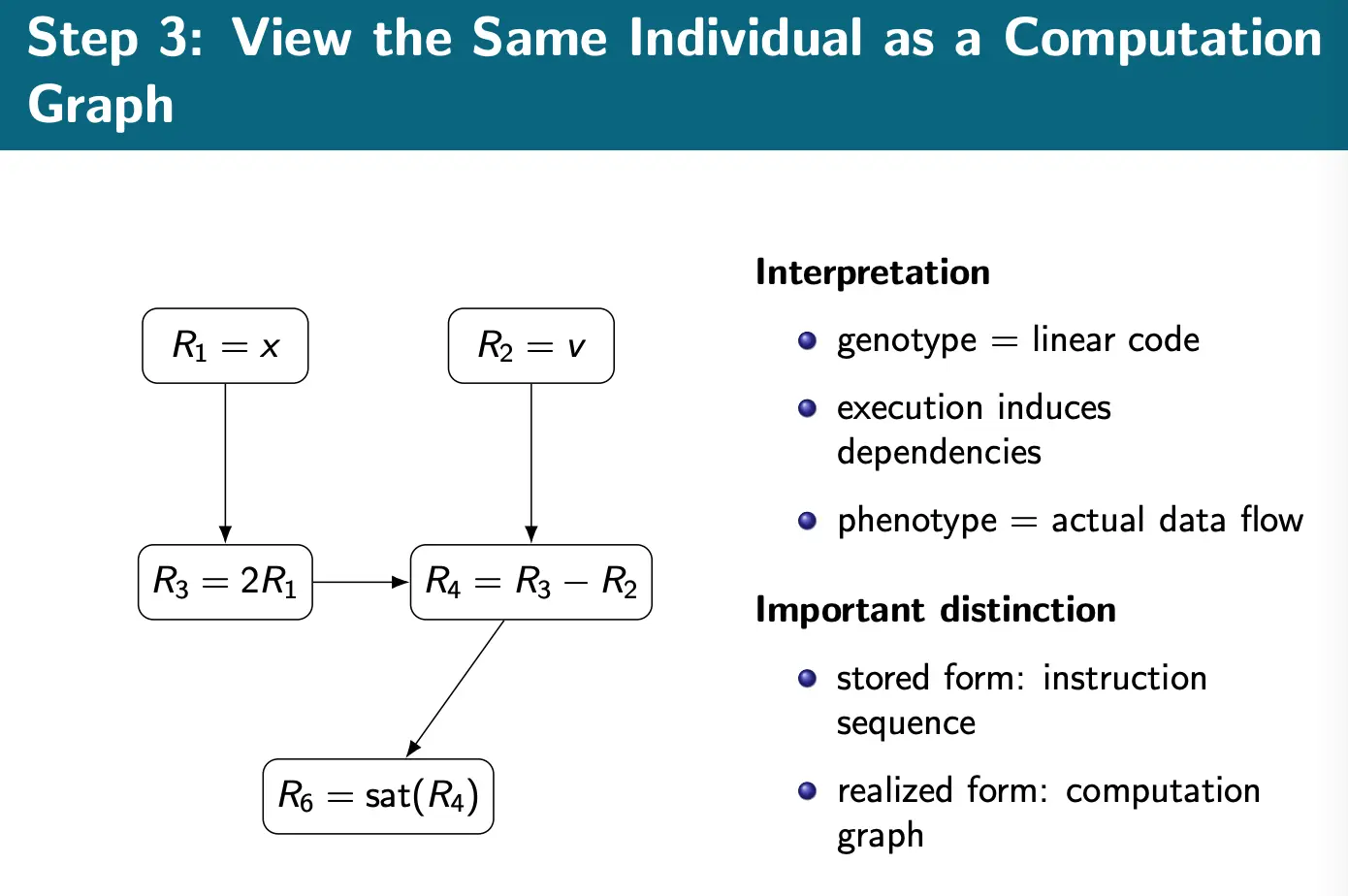
Although LGP is stored as a sequence, it induces a data-dependency graph.
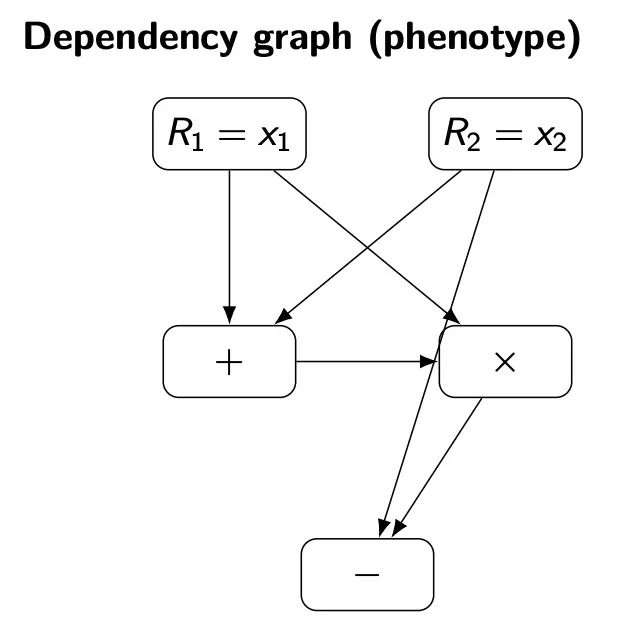
- Nodes = operations/registers
- Edges = data flow
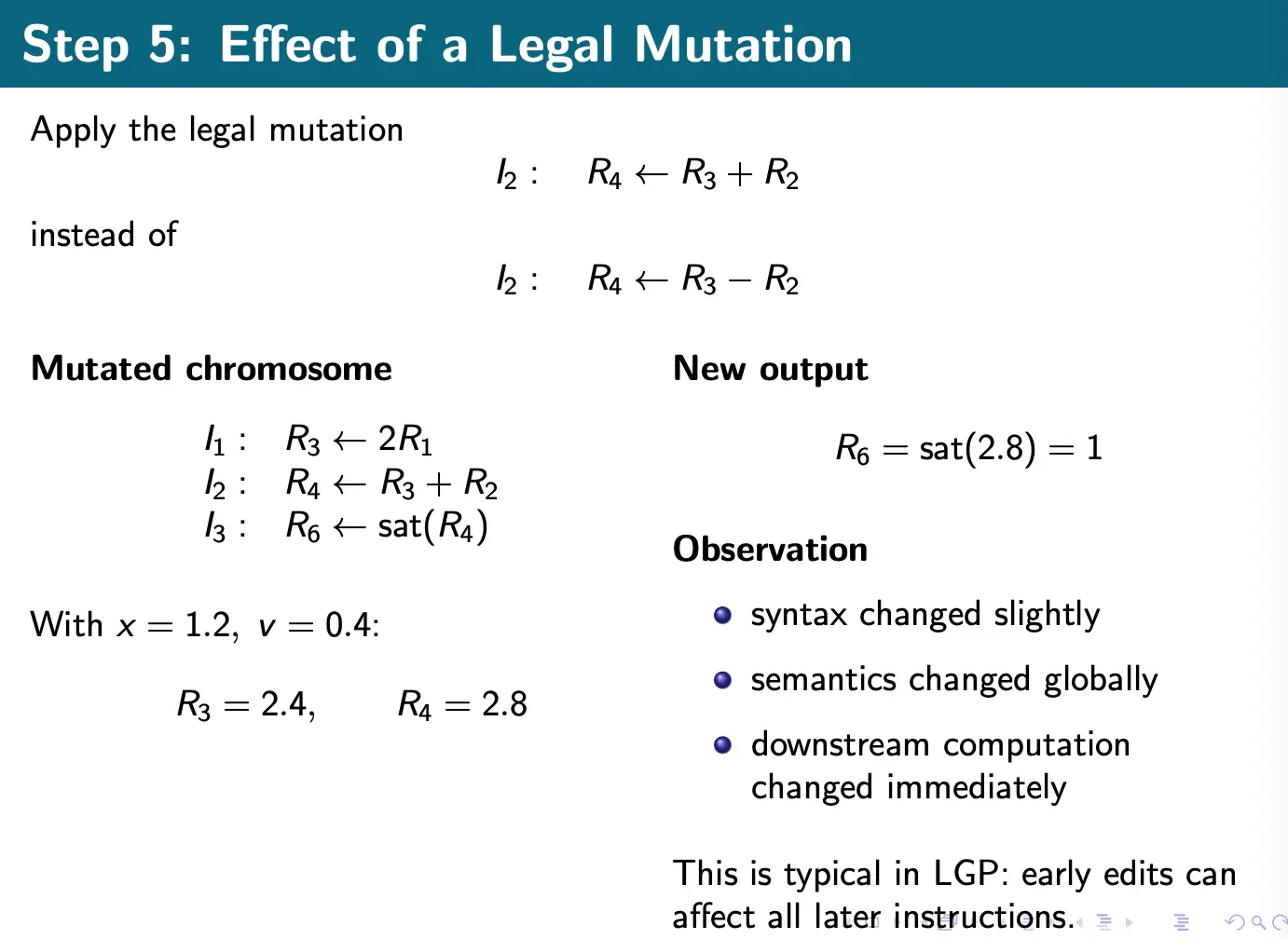
Mutation
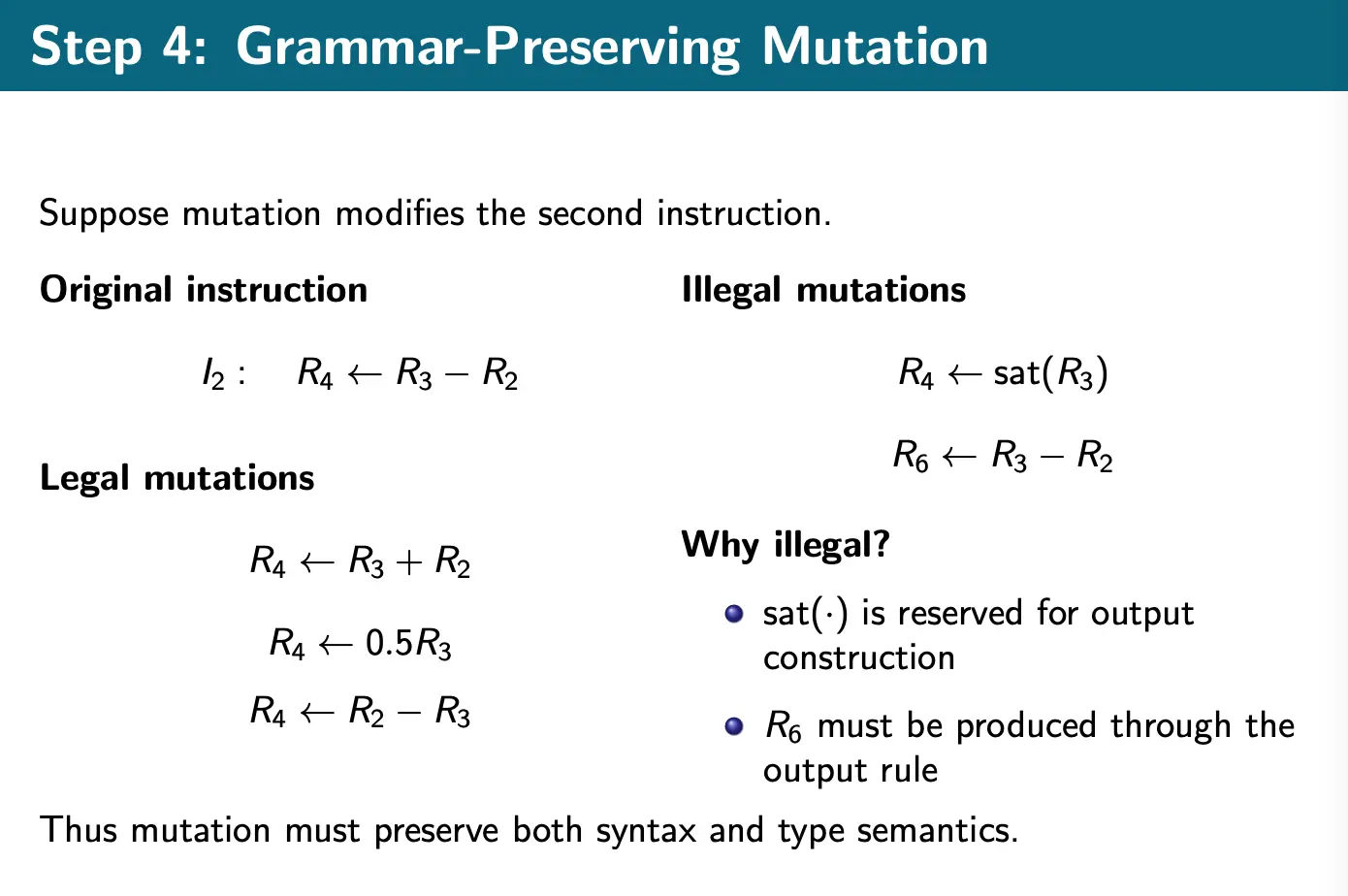
Typical mutation operators for LGP include:
- Change the operator:
- Change a source register
- Change the destination register
- Insert a new instruction
- Delete an instruction
Note that insertion is usually pretty easy:
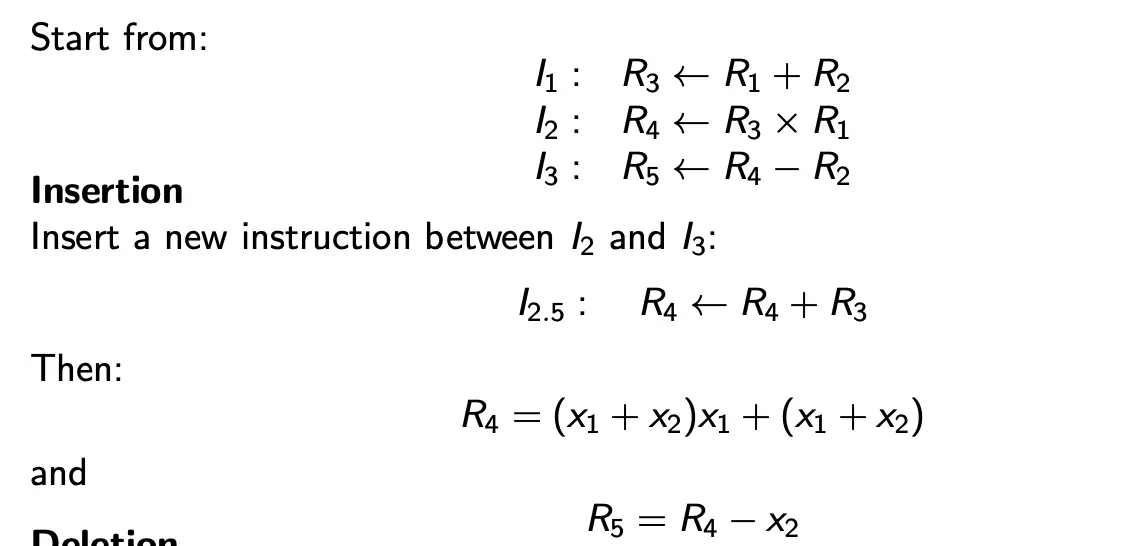
But deletion might introduce issues. If above is deleted, any later instruction depending on may become invalid unless repair. Hence, we often enforce legal register references, repair after mutation, or fixed/bounded program length.
Note that other insertion and deletion mutations actually change the number of instructions, while replacement means the program length is still the same.
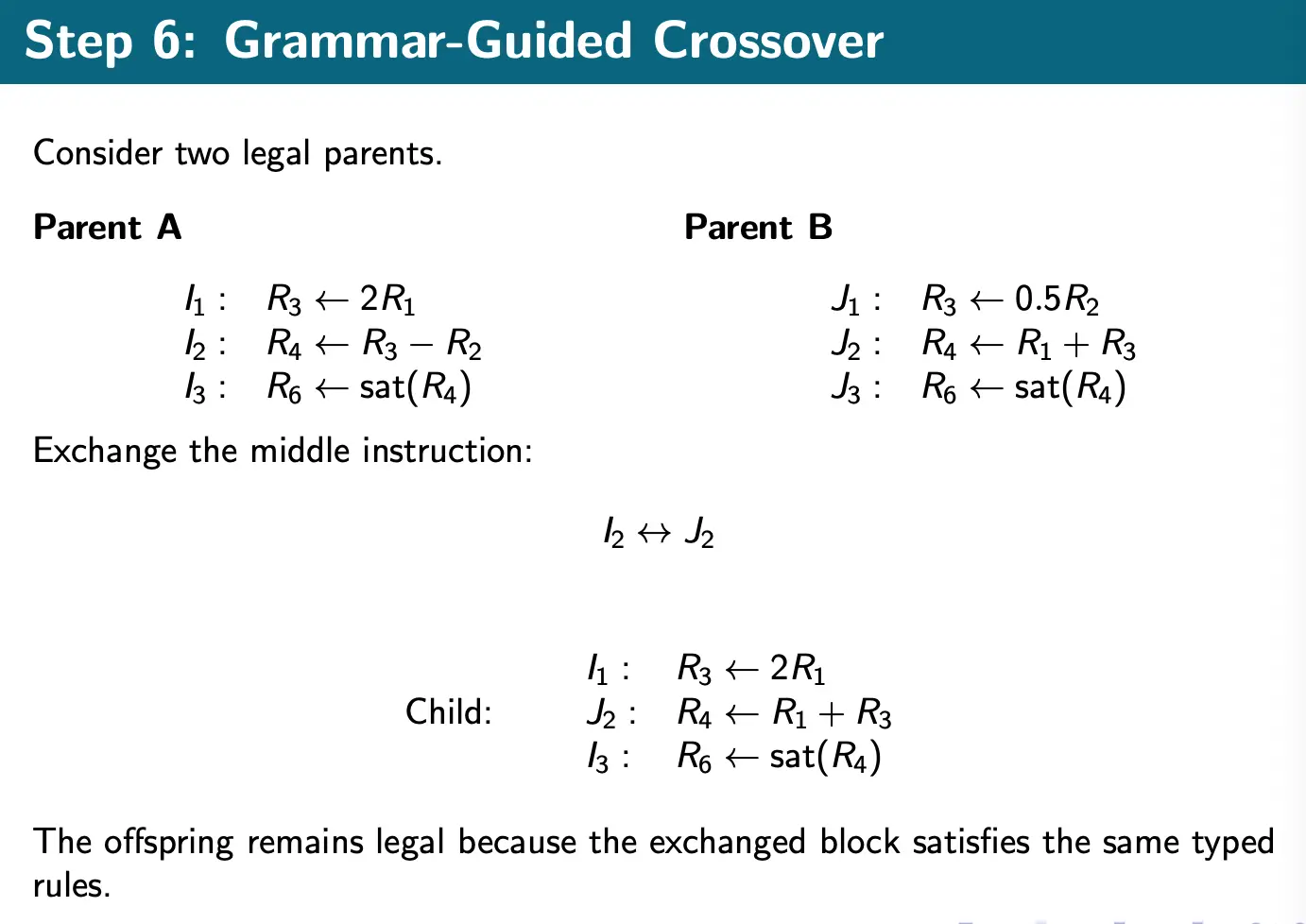
Crossover
Crossover in LGP usually exchanges instruction segments.
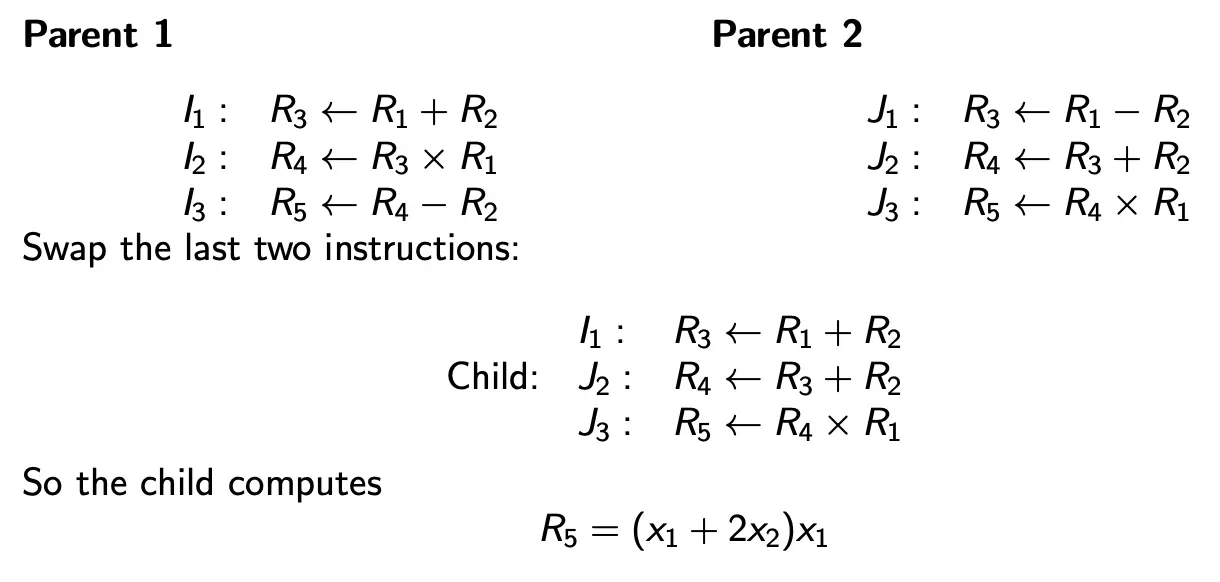
Basically, crossover recombines partial computations; unlike tree GP, recombination happens over instruction blocks. Register consistency is important for meaningful offspring.
Example
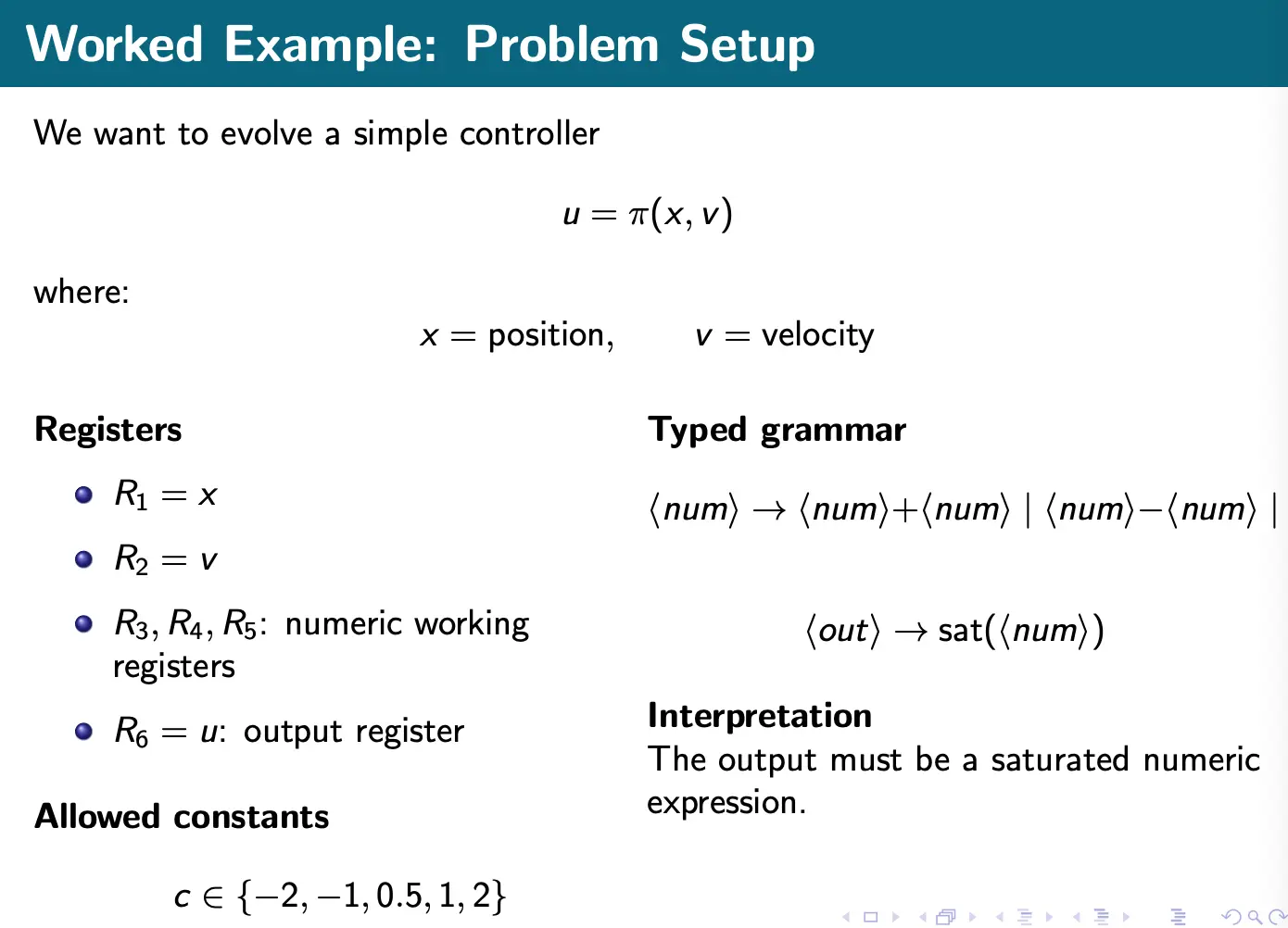
- Note that we are using a grammar here like Grammar-Guided Genetic Programming