| Symbol | Term |
|---|---|
| Interest rate | |
| Present value | |
| Future value | |
| Cash flow | |
| Number of periods | |
Time Value of Money
Future value of a cash flow:
Present value of a cash flow:
Interest Rate vs. Discount Rate vs. Cost of Capital
- “Interest rate” is used to mean a quoted rate in the market.
- “Discount rate” is the appropriate rate for discounting a given cash flow, matched to the frequency of the cash flow.
- “Cost of capital” to indicate the rate of return on an investment of similar risk.
Chapter 6 - Bonds
Bond Calculation Questions
- Use coupon rate to calculate PMT:
- Make sure to multiply by number of payments per year
- I/Y is yield to maturity divided by number of payments per year
- FV is par value
- PV is price paid
Premium/Par/Discount
- Premium/Above par: Bond price > Face Value, or Coupon rate > YTM
- At par: Bond value = Face Value, or Coupon Rate = YTM
- Discount/Below par: Bond price < Face Value, or Coupon Rate < YTM
Sensitivity
Longer maturity = sensitive
Low coupon = sensitive
- Why is low/no coupon sensitive? A larger portion of the cash flows to be received in the future will result in larger changes due to compounding
Market rate rises -> Price falls -> YTM rises to match market
Market rate falls -> Price rises -> YTM falls to match market
Credit Spread
Credit spread = Bond yield - treasury yield
Chapter 7 - Stock
- Reinvsting earnings:
Chapter 9 - Capital Budgeting
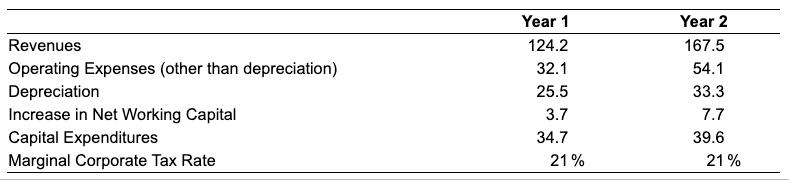
- Free cash flows = Earnings + Depreciation - Capital Expenditures - Change in NWC
- Earnings here is incremental earnings or unlevered net income
- Net working capital (NWC) = Current Assets - Current Liabilities
Incremental earnings approach:
Tax shield approach:
After-tax cash flow from asset sale:
where capital gain/loss is sale price - salvage value.
- Savage value = purchase price - accumulated depreciation
Chapter 12 Systematic Risk
Beta
-
Beta () is the is the expected percentage change in the return of a security for a 1% change in the market’s return.
-Beta for HP = 1.4, Market excess return was -2.5 → HP excess return was -
Excess return = Return - Market portfolio return
SML
- -intercept = risk-free rate
- = market risk premium
- above SML → underpriced (we should buy)
- below SML → overpriced (we should sell)